A windmill that is not a windmill
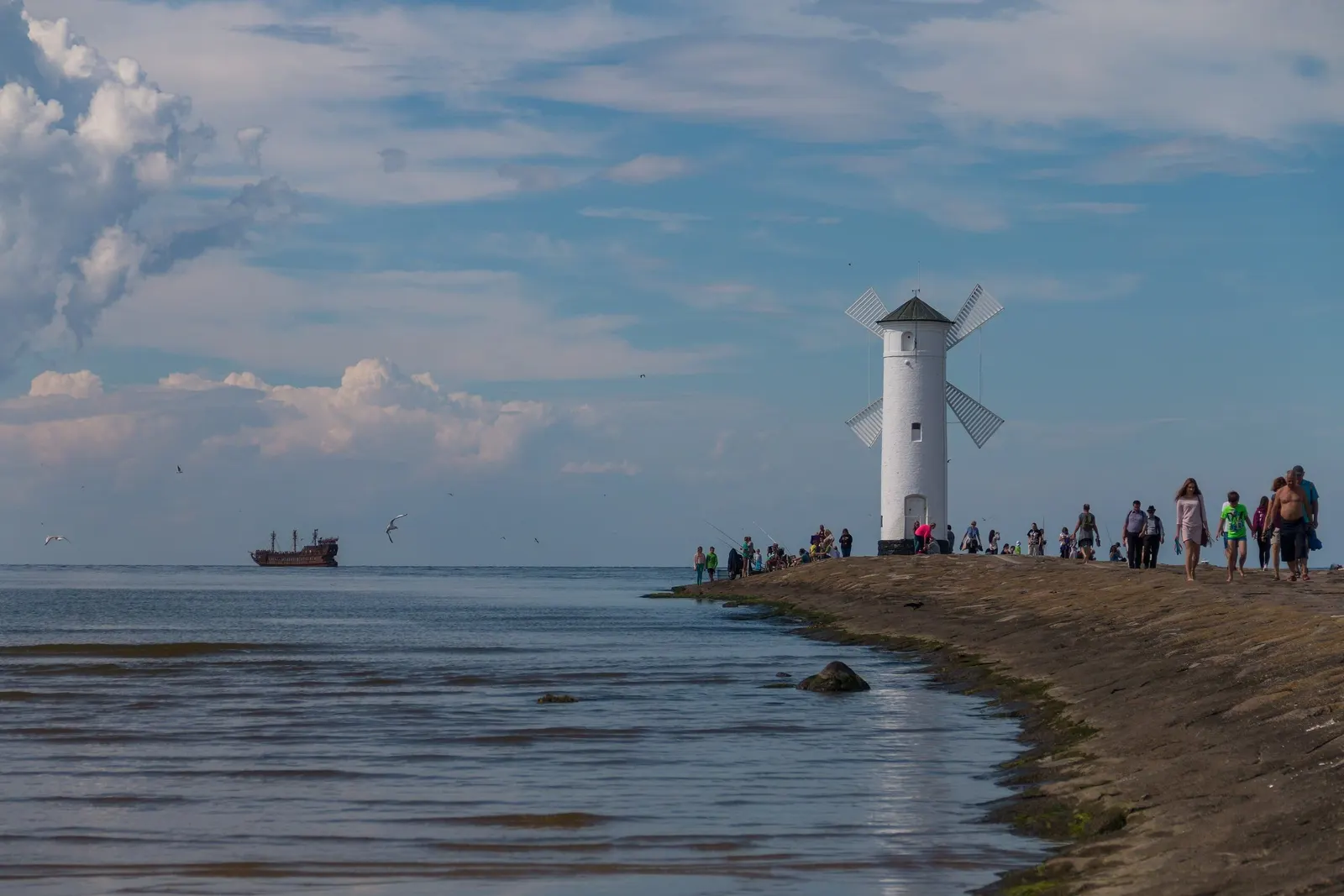
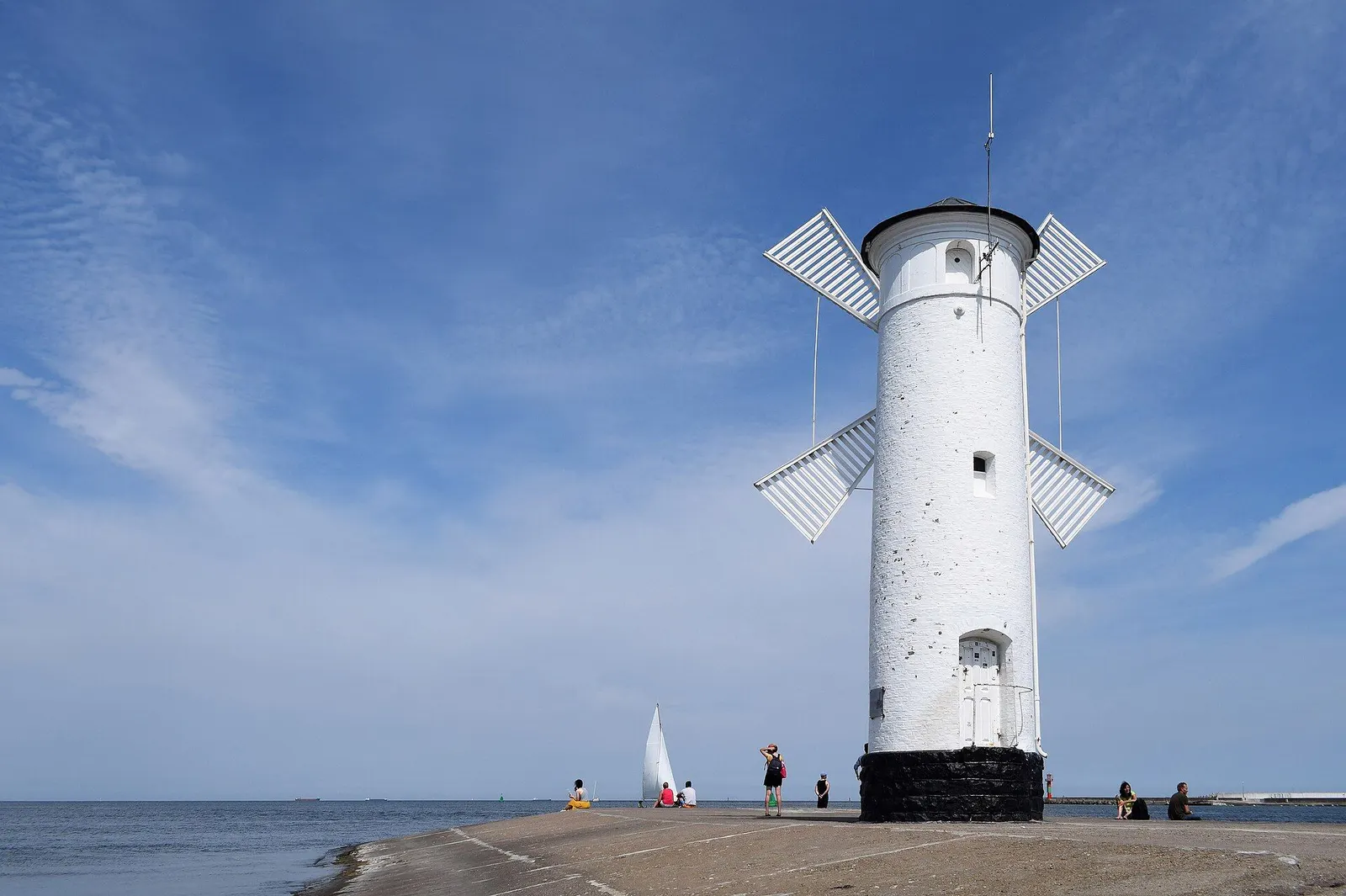
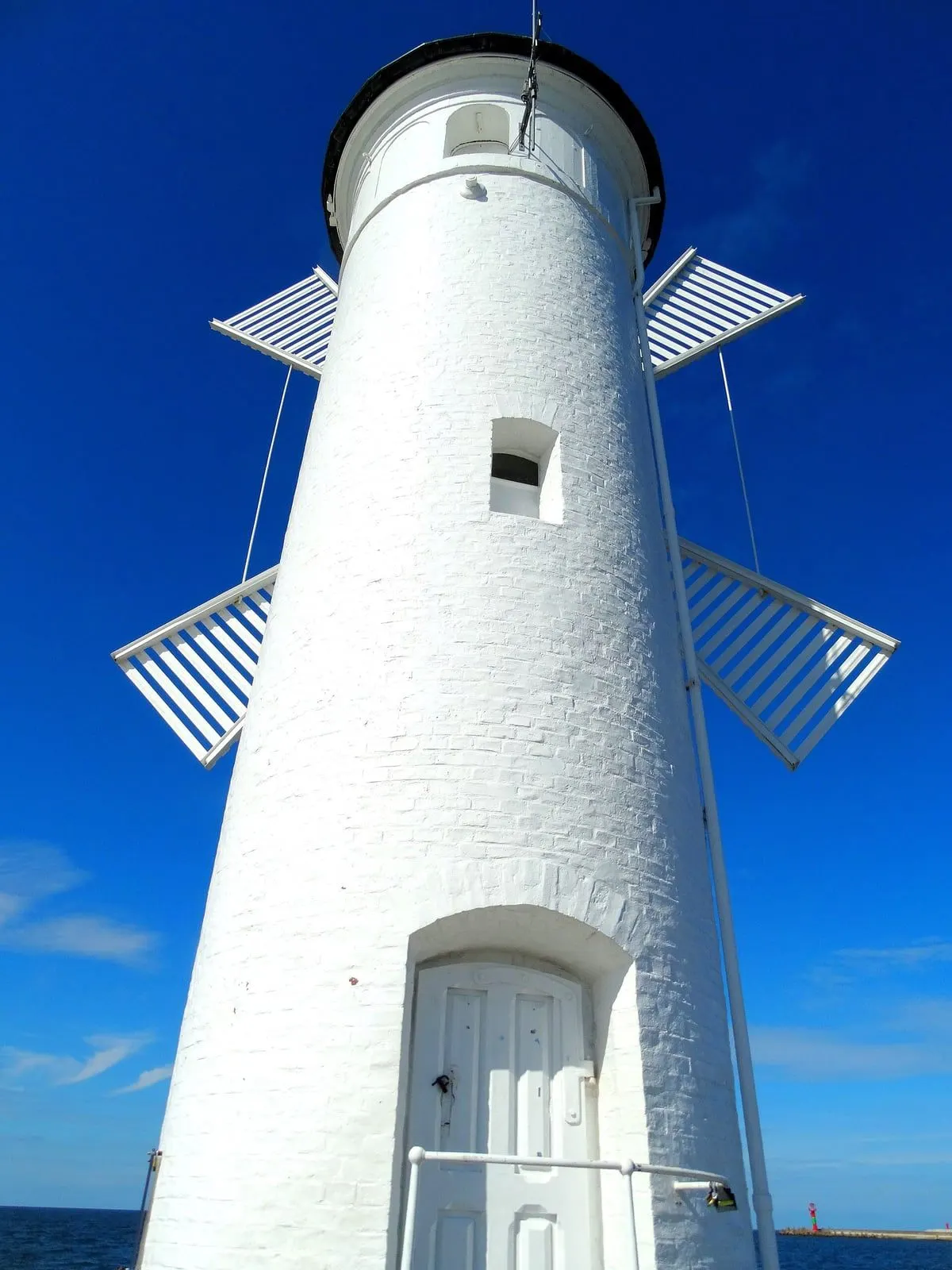
Stawa Młyny looks like a small white windmill with a black roof, but it has never milled any grain. It is a beacon, a navigation mark built in 1873-1874 when the shipping channel to the port was modernised. It is about 10 metres tall and stands at the very end of the western breakwater, where the Świna flows into the Baltic.
For locals it is the most important symbol of the town: the beacon is part of Świnoujście’s official logo and appears on most postcards.
A walk along the breakwater
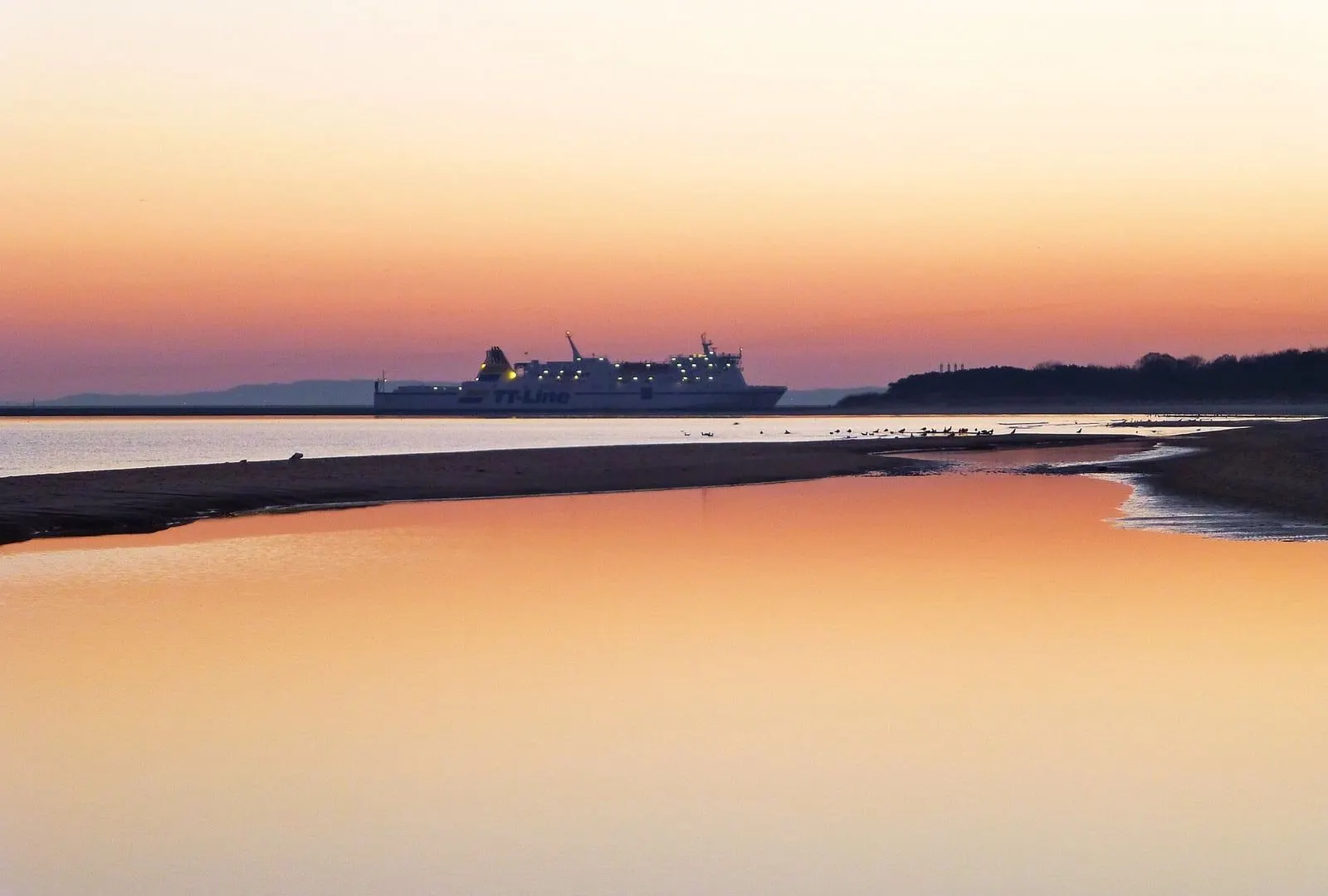
You reach the beacon along the breakwater, a long concrete pier reaching out into the sea. On one side you have the open Baltic, on the other the port channel, where ferries to Sweden, passenger ships and fishing boats pass by. The big ferries sail surprisingly close to the breakwater, which children in particular find impressive.
- The walk is most charming before sunset, when the sky over the sea turns orange.
- In winter and autumn swans and ducks often swim by the breakwater.
- The breakwater is flat, so you can walk it with a pushchair too.
What to combine it with
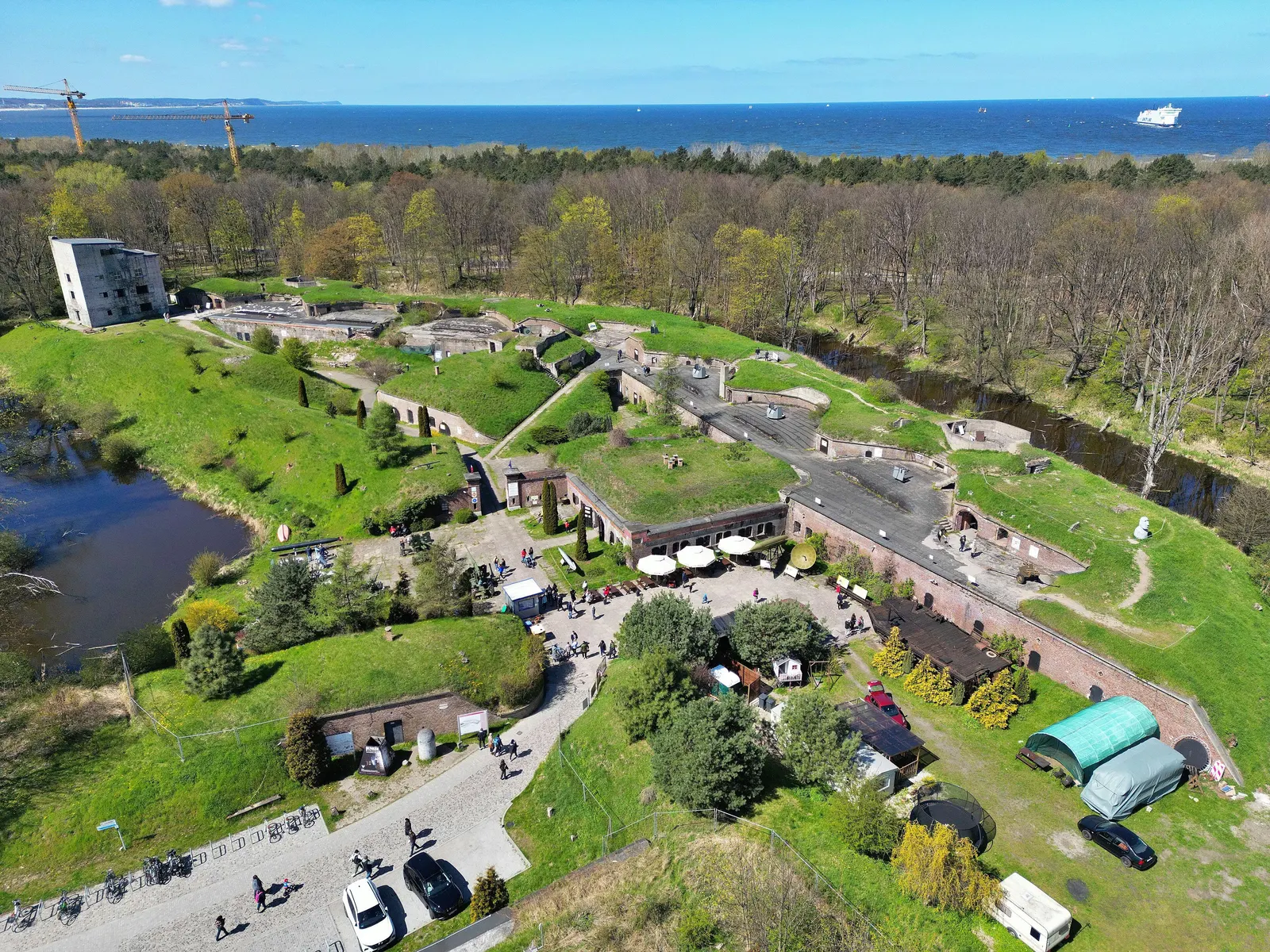
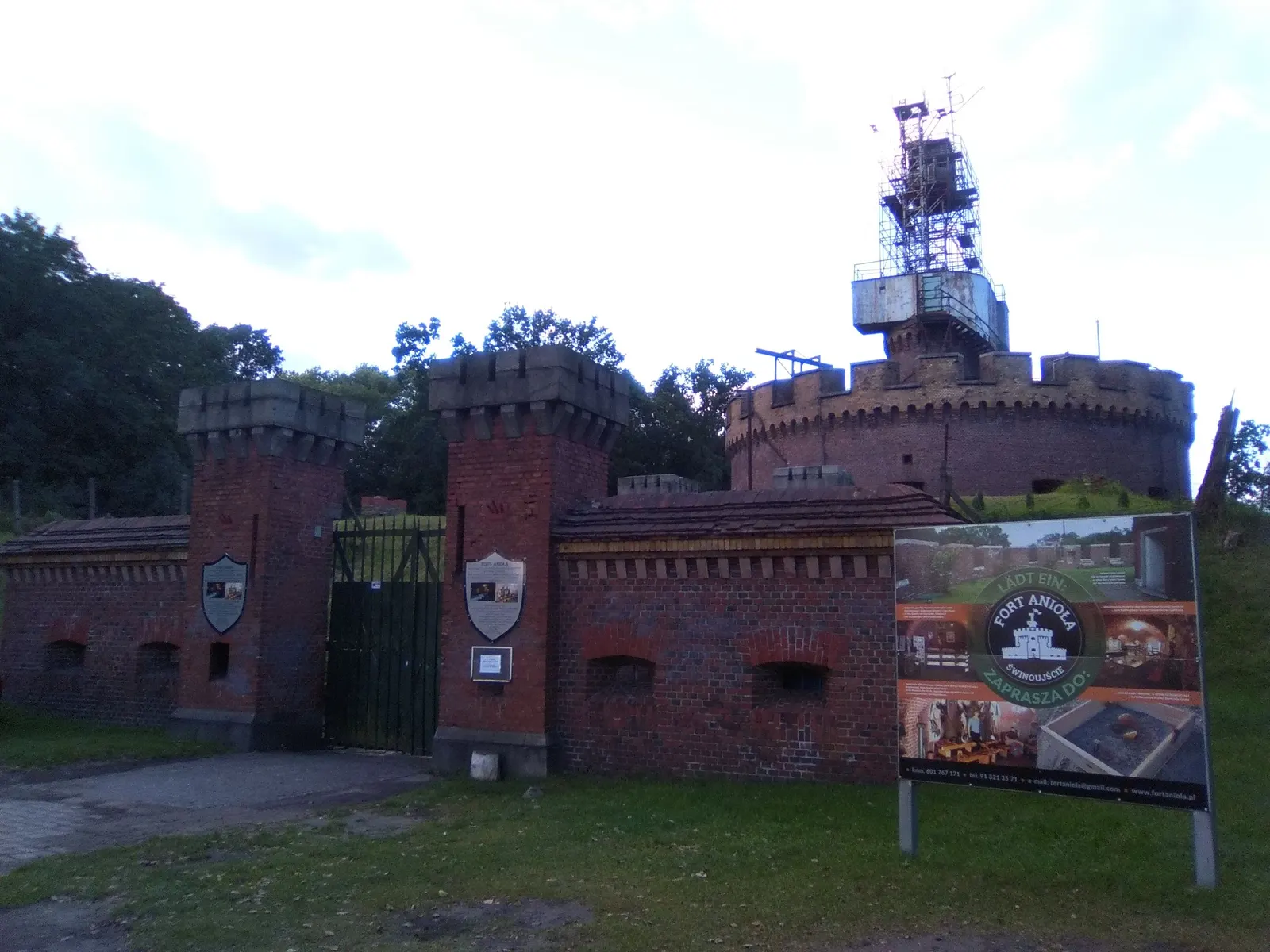
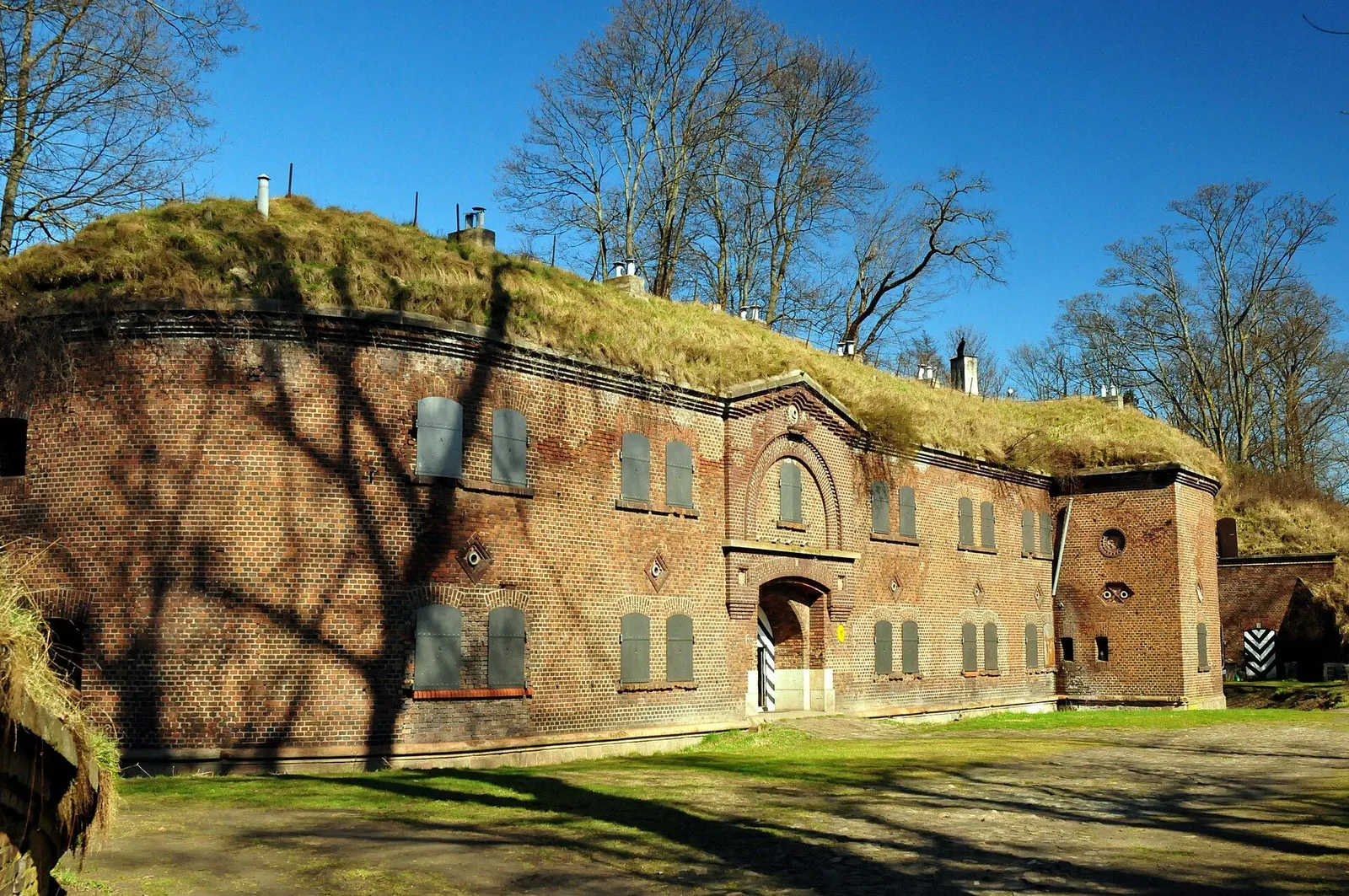
The beacon is at the eastern end of the beach, close to the West Fort and Fort Anioła. The easiest way is to walk here along the beach from the promenade and return along the paths through Park Zdrojowy. We describe the whole loop in the walk Along the beach to Stawa Młyny.
Frequently asked questions
Can you walk out on the breakwater to Stawa Młyny?
Yes, you can walk out along the western breakwater all the way to the beacon. In a storm, better give it a miss.
Why does Stawa Młyny look like a windmill?
It is a navigation mark whose shape was meant to be clearly visible and easy to recognise from the sea. Its name, “Młyny” (mills), comes from that shape.
How long does it take to walk to Stawa Młyny from the promenade?
From the central part of the promenade it is about 20-30 minutes on foot along the beach or the paths by the dunes.